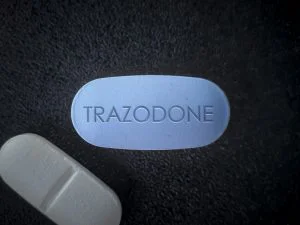


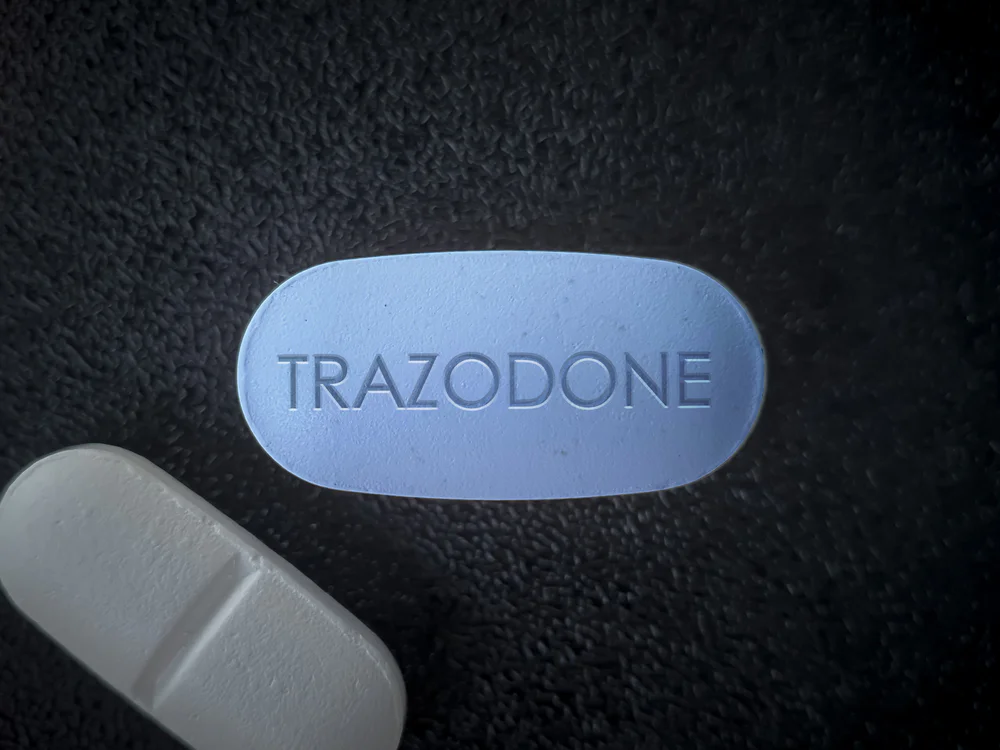
Trazodone is a prescription-only antidepressant used in the UK to treat depression and anxiety, and it’s sometimes prescribed at a low dose to help with sleep. It belongs to a class of medicines called serotonin antagonist and reuptake inhibitors, or SARIs.
Trazodone can still cause side effects, interact with alcohol and other drugs, and bring on withdrawal symptoms if it’s stopped suddenly. Whether you take it yourself or you’re worried about a partner, relative or friend, this page covers what it’s used for, how it works, doses, side effects, misuse and overdose risks, interactions, withdrawal and when to get help.
What is trazodone?
Trazodone is the common name for trazodone hydrochloride, the active ingredient in all the trazodone UK doctors prescribe. It was previously sold in the UK under the brand name Molipaxin, which has since been discontinued, so trazodone is now supplied as a generic medicine.
Because trazodone works differently from better-known antidepressants, it’s easy to mix it up with other types of medication. With this in mind, here’s trazodone’s drug class and its mechanism of action.
Is trazodone an SSRI or a benzodiazepine?
Trazodone isn’t an SSRI like sertraline, and it isn’t a benzodiazepine or an opioid either. Instead, it’s a part of its own drug class of serotonin antagonist and reuptake inhibitors, and its prescribing information describes it as chemically unrelated to other known antidepressants.
Trazodone’s sedating effect bears some resemblance to benzodiazepines like Valium, but it works in a different way and its pharmacological profile is different from theirs.
How does trazodone work?
Trazodone is a multifunctional drug thought to work by increasing the levels of chemicals in the brain linked to mood, such as serotonin, with weak serotonin reuptake inhibition as part of its mechanism. More specifically, trazodone acts on various serotonin receptors as well as histamine and alpha-1-adrenergic receptors.
Blocking those receptors is what gives trazodone its sedating effect at low doses, and it’s also why trazodone can lower your blood pressure, especially in older people with heart conditions, which helps explain some of its clinical effects.
What is trazodone used for?

Trazodone is approved as an antidepressant for major depressive disorder and, in the UK, is licensed to relieve the symptoms of depression, including depression accompanied by anxiety. The UK product information also sets out a dose for anxiety, and the use of trazodone extends beyond depression and insomnia in some off-label or less well-supported cases, which is why you might be prescribed it even if worry, rather than low mood, is the main problem you’re facing.
Major depressive disorder and anxiety
When trazodone is prescribed for depression or anxiety, the aim is to ease your symptoms over the first few weeks of treatment, and improving sleep can also help some depressed patients during this time. Your doctor may start you on a low dose and increase it after a week or more to find the dose that helps you most, as higher doses are usually needed for antidepressant efficacy than for sleep.
Trazodone for sleep
Trazodone can make you feel sleepy, so the NHS suggests taking it at bedtime if you’re having trouble sleeping. Some doctors also prescribe low-dose trazodone off-label for insomnia disorder and other sleep problems, which is one of the trazodone uses that isn’t licensed in the UK.
No antidepressant is licensed for insomnia, and the evidence on how well they help with sleep is unclear. The therapeutic doses used to treat depression can be too sedating for some people, which is one reason lower doses are often used for sleep. A review of the research found low-dose trazodone may give a small improvement in sleep quality in the short term, with no evidence for long-term use.
This also means there’s no licensed UK max dose for sleep or minimum dose for sleep. If you’ve been prescribed it to help you sleep, your doctor will decide your trazodone dosage based on your situation, and it’s best to stick to that dose.
Trazodone doses
Your trazodone dosage depends on what it’s being used for and your age. The recommended UK doses are:
| What it's used for | Usual starting dose | Maximum dose |
|---|---|---|
| Depression in adults | 150mg a day, in divided doses after food or as one dose at bedtime | Up to 300mg a day, or 600mg a day for adults in hospital |
| Depression with anxiety | As for depression | As for depression |
| Anxiety | 75mg a day | Up to 300mg a day if needed |
| Very elderly or frail adults | 100mg a day, in divided doses or as one dose at night | Single doses above 100mg should be avoided |
| Under 18s | Not recommended | Not recommended |
| Sleep | No licensed minimum dose for sleep | No licensed max dose for sleep |
Taking trazodone after a meal or light snack can help reduce side effects, and if your dose is split through the day, the larger part is usually taken at bedtime. If you miss a dose, take the missed dose when you remember unless it is nearly time for the next one, and do not take 2 doses together. Taking more than 600mg in 24 hours is treated as an overdose risk. Doctors and pharmacists also use the British National Formulary, or BNF, as a guide to prescribing trazodone.
Trazodone 50mg, 100mg and 150mg
In the UK, trazodone HCL is available as 50mg and 100mg capsules, 150mg tablets and an oral liquid, which helps if you find capsules hard to swallow. Your dose might be made up of more than one capsule or tablet, so it’s worth checking the label each time you collect your prescription.
How long does trazodone take to work?
Trazodone usually takes about two weeks to start working, though it can sometimes take longer. This is why your doctor will keep an eye on you in the first few weeks, as improvement may not happen straight away.
It’s natural to feel frustrated if you don’t notice a difference quickly, but stopping trazodone too early means you might not give it the chance to help.
How long does trazodone stay in your system?
Trazodone has a half-life of 5 to 13 hours, which is how long it takes for the amount in your body to halve, and most of a dose leaves your body in your urine within 3 days. If you’re older, it can stay in your body for longer.
Trazodone side effects
Like any medicine, trazodone can cause side effects, and most of the common ones are mild and ease as your body gets used to it. Knowing which side effects to expect, and which ones need medical help, means you can take trazodone with more confidence.
Common side effects

The most commonly reported side effects of trazodone include:
Feeling sleepy
Feeling dizzy
Feeling tired
Headaches
Feeling sick
Constipation
Muscle pain
A dry mouth
Drowsiness is the side effect people notice most at the start, and it usually wears off as you carry on taking trazodone. There aren’t any separate side effects listed for women, so side effects in women are the same as those listed above, and trazodone can lower sex drive in men and women alike. If you notice erectile dysfunction or any other change in your sex life, it’s worth mentioning to your doctor, although trazodone is generally considered less likely than some other antidepressant medications, including tricyclic antidepressants, to cause sexual dysfunction.
Serious side effects
Serious side effects of trazodone are rare, but they need medical help straight away, and they include:
A painful erection that won’t go away, which is called priapism
Confusion, sweating, shaking or a fast heartbeat, which can be signs of serotonin syndrome
Changes to your heart rhythm, known as QT prolongation
A drop in blood pressure when you stand up, known as orthostatic hypotension
Fainting
Feeling tired or confused, which can be a sign of low sodium in your blood
Thoughts of harming yourself
Priapism isn’t the same as erectile dysfunction, and it needs urgent attention, as there are reports of it needing surgery or causing permanent sexual problems. It has been reported in about 1 in 6,000 male patients.
QT prolongation has been reported with trazodone therapy. There may be an increased risk of serious rhythm problems, including cardiac arrhythmia, in people with cardiac disease or other heart disease.
Antidepressants can also raise the risk of suicidal thoughts in people under 25. If you have thoughts of harming yourself at any time, contact your doctor or go to a hospital straight away.
If you think you’re having any other serious side effects, call NHS 111 for advice. You can also report any side effects through the MHRA Yellow Card Scheme, which helps keep track of how safe medicines are.
Does trazodone cause weight gain?
Weight gain isn’t listed as a side effect of trazodone, although increased appetite is, and so is weight loss. If you notice your appetite or weight changing while you’re taking trazodone, it’s worth mentioning it to your doctor at your next review.
Is trazodone addictive?
Trazodone isn’t thought to be addictive, and its prescribing information states there’s no evidence that it has any addictive properties. Its potential for trazodone abuse is considered low compared with many other prescription medications, and it’s considered less habit-forming than benzodiazepine-type sleeping pills. That’s one reason it’s sometimes used for sleep in addiction recovery, which we cover later in this guide.
That said, any medicine that affects how you feel or sleep can be used in ways it wasn’t meant to be, so misuse can still happen. Physical dependence, including antidepressant discontinuation syndrome, is not the same as addiction or substance use disorders. Below, we look at whether trazodone is a controlled substance, how it can be misused, and the signs that your use might be becoming a problem.
Is trazodone a controlled drug in the UK?
Trazodone is a prescription-only medicine, but it isn’t listed as a controlled drug under UK misuse of drugs legislation. This means trazodone isn’t a controlled substance, so it’s legal to have it if it’s been prescribed to you, but it should only be taken by the person it was prescribed for.
Can trazodone be misused?
Trazodone can be misused, even though it isn’t considered addictive. A large study of reports to the US medicines regulator identified drug abuse as a possible new risk linked to trazodone. Reports like these show a possible warning sign rather than proof that trazodone causes misuse.
Misuse can include taking more than you’ve been prescribed, or using trazodone to feel calm or knocked out rather than for mood or sleep. US addiction services report people crushing and snorting tablets, or taking trazodone with alcohol or cannabis to strengthen the effects, and say it’s most often misused by people who were prescribed it rather than bought on the street. Mixing it with alcohol or other drugs carries real risks, which we cover in the next section.
Signs trazodone use is becoming a problem
It can be hard to notice when your use of a prescribed medicine has started to change, but signs to look out for include:
Taking more than your prescribed dose
Running out of your prescription early
Taking it for reasons other than mood or sleep
Mixing it with alcohol
Mixing it with other drugs
Getting trazodone without a prescription
Snorting crushed tablets
Feeling unable to sleep without it
If any of these sound familiar, it’s worth speaking to your GP or prescriber before making any changes, so they can review your dose with you. Misuse is different from taking it as prescribed: a substance use disorder involves negative consequences or impaired functioning, not just physical dependence.
Mixing trazodone with alcohol and other drugs
Trazodone slows down your brain and nervous system, and that effect gets stronger when it’s mixed with other substances that do the same. This is one of the main risks to be aware of, especially if you’re using alcohol or other drugs alongside trazodone.
Trazodone and alcohol
Trazodone intensifies the sedative effects of alcohol, which is why you’re advised to avoid alcohol while you’re taking it. You shouldn’t take trazodone at all if you’re intoxicated with alcohol, and the patient leaflet advises telling your doctor before taking it if you’re a heavy drinker.
For example, having a drink on a night when you’ve also taken trazodone can leave you far more drowsy than either would on its own.
Trazodone with benzodiazepines, opioids or other sedatives
Trazodone has effects on the central nervous system that can add to those of benzodiazepines and opioids. The sedative effects of other medicines, including sleeping pills, anti-anxiety medicines, antipsychotics and antihistamines, can also be intensified when they’re taken with trazodone.
Some opioids carry extra risks with trazodone too. Buprenorphine taken with trazodone can lead to serotonin syndrome, a potentially life-threatening condition, and tramadol can add to trazodone’s effect on lowering the seizure threshold. Similar serotonergic risk can also increase when trazodone is combined with other antidepressant medications, including those used for their anxiolytic effects or with similar sedative overlap.
Other medicines that interact with trazodone
Trazodone can have dangerous drug interactions, so it’s important your doctor or pharmacist knows about every prescription medicine, over-the-counter product, and herbal remedy you take. Medicines that can interact with trazodone include:
MAOI antidepressants
Other antidepressants that affect serotonin
Some antibiotics, like erythromycin
Some antifungals, like ketoconazole
Some HIV medicines, like ritonavir
Carbamazepine
Warfarin
Digoxin
Phenytoin
Medicines that affect your heart rhythm
Several of the medicines on this list are known as CYP3A4 inhibitors, and they can raise the amount of trazodone in your blood; this includes ketoconazole. CYP3A4 inducers such as carbamazepine can reduce trazodone levels by about 60-74%. Trazodone shouldn’t be taken within two weeks of stopping an MAOI, and an MAOI shouldn’t be started within one week of stopping trazodone.
If you’ve been taking more trazodone than prescribed, running out early, or mixing it with alcohol or other sedatives, you can talk to us about it in complete confidence. Call PCP on 08000 380 480 or fill in our Get Help form, and a member of our team will listen without judgement and talk you through the support available.
Trazodone overdose: signs and what to do
If you’ve taken more than your prescribed dose of trazodone, call NHS 111 for advice straight away. If you’re told to go to A&E, ask someone to drive you or call 999 for an ambulance, and take the trazodone packet and your other medicines with you.
The most common signs of a trazodone overdose include:
Drowsiness
Dizziness
Feeling sick
Being sick
More serious cases can lead to seizures, low blood pressure, a fast heartbeat, breathing problems or coma, and symptoms can appear 24 hours or more later. An overdose of trazodone with other antidepressants can also cause serotonin syndrome, so tell the call handler about everything that’s been taken, including alcohol.
Trazodone withdrawal
Stopping trazodone suddenly can cause withdrawal symptoms, which is why it’s best to come off it gradually with your doctor’s support. The longer you’ve been taking it, the more important that support becomes.
Trazodone withdrawal symptoms
Trazodone withdrawal symptoms can start within 5 days of stopping, and while they’re usually mild and pass on their own, they can sometimes be severe. The risk is higher if you stop suddenly after taking trazodone regularly for more than 8 weeks, and symptoms can include:
Headaches
Feeling sick
Generally feeling unwell
This is known as antidepressant discontinuation syndrome, and it is usually mild and temporary, as can also happen with other antidepressant medications.
While these symptoms may sound worrying, knowing what to expect means you can plan around them, and reducing your dose slowly helps keep them to a minimum.
How to come off trazodone safely
The prescribing information recommends lowering your dose gradually when you stop trazodone, especially if you’ve been taking it for a long time. Your doctor will usually reduce your dose over several weeks or months, and it’s important to follow their plan rather than cutting down on your own. You should not usually stop or restart it without medical advice, especially if you also take other antidepressant medications.
If you’ve been taking more trazodone than prescribed, or using it alongside alcohol or other drugs, stopping can be more complicated. In that case, medical support can help you come off everything safely, rather than tackling one substance at a time.
Trazodone in detox and addiction recovery
Sleep problems are common after stopping alcohol or drugs, and getting enough rest is a big part of feeling well enough to stay in recovery. Treatment programmes often address both addiction and mental health needs during recovery, and trazodone is one of the medicines sometimes used to help with sleep, so it’s worth knowing where it fits.
Why trazodone is sometimes used for sleep in early recovery
Doctors working in addiction are careful with sleep medication, as sedatives can themselves become dependence-forming, and sleeping pills like benzodiazepines and Z-drugs such as zopiclone can lead to tolerance and dependence. Because trazodone carries less of that risk, it’s commonly prescribed to people with alcohol dependence who struggle with sleep disturbances in the initial recovery phase after alcohol detoxification.
The evidence for this use is still limited, though. In one trial of people who had just been through alcohol withdrawal, trazodone improved sleep while it was being taken, but sleep matched the placebo group once it was stopped. Trazodone has also been studied in delirium tremens, including a 2020 study where the trazodone group improved after not responding to benzodiazepines.
The same trial found that people taking trazodone had less improvement in the number of days they stayed alcohol-free than the placebo group, and drank more on drinking days after stopping it. The researchers concluded that trazodone can’t be recommended with confidence as a routine sleep aid after alcohol detox until more studies have been carried out.
This would suggest that sleep medication on its own isn’t the whole answer, and that support for the reasons behind your sleep problems and substance use counts just as much. If depression and addiction overlap for you, treatment that looks at both together, known as dual diagnosis treatment, can help you recover from each of them.
Getting help with prescription drug use
If you’re worried about how you’re using trazodone, or you’re relying on it alongside alcohol or other drugs, reaching out for help can feel like a big step. At PCP, that first step is a free, confidential assessment over the phone, where we get to know your situation and talk through your options.
If you decide to go ahead with treatment, we can arrange your admission quickly, and your detox is supervised around the clock by our in-house doctors and nurses. From there, one-to-one counselling and group therapy help you understand what’s been driving your use, with support for both substance use disorders and mental health conditions, and our aftercare carries on supporting you once your programme ends.
Call 08000 380 480 or fill in our Get Help form, and a member of our admissions team will explain how admission works and what would happen next for you.
FAQs
What is the street name for trazodone?
Trazodone isn’t widely sold on the street in the UK, so it doesn’t have a well-known UK street name. US addiction services report slang names such as “sleepeasy”, “trazo” and “traz” being used for it.
Is it safe to take trazodone every night?
Yes, if that’s how your doctor has prescribed it, and many people take it once a day at bedtime. If you’re taking it for depression, you’ll usually carry on for at least 6 months after you feel better. If it’s been prescribed for sleep, there’s no evidence it helps in the long term, so ask your doctor to review it regularly. Don’t take extra on nights you can’t sleep, and avoid alcohol while you’re taking it.
Is trazodone a strong sleeping pill?
Trazodone isn’t a sleeping pill. It’s an antidepressant that causes drowsiness, which is why low doses are sometimes prescribed off-label for sleep, and research suggests it only gives a small, short-term improvement in sleep quality. It can still make you very drowsy, especially when you first start taking it or if you mix it with alcohol or other sedatives.
Why is trazodone not helping me sleep?
Trazodone may only give a small improvement in sleep quality, and there’s no evidence it helps with sleep in the long term. If trazodone isn’t helping you sleep, speak to your doctor rather than taking more, as they can review your dose and look at other causes of your sleep problems.
Can I take trazodone after surgery?
Trazodone is usually continued around surgery, as stopping it suddenly carries a risk of withdrawal symptoms. Trazodone can strengthen the effects of some anaesthetics, so tell your doctor or dentist you’re taking it before any operation.
Can I drive on trazodone?
You shouldn’t drive, ride a bike or use machinery if trazodone makes you feel sleepy, dizzy or tired. It’s also illegal in England, Scotland and Wales to drive with legal drugs in your body if they impair your driving.