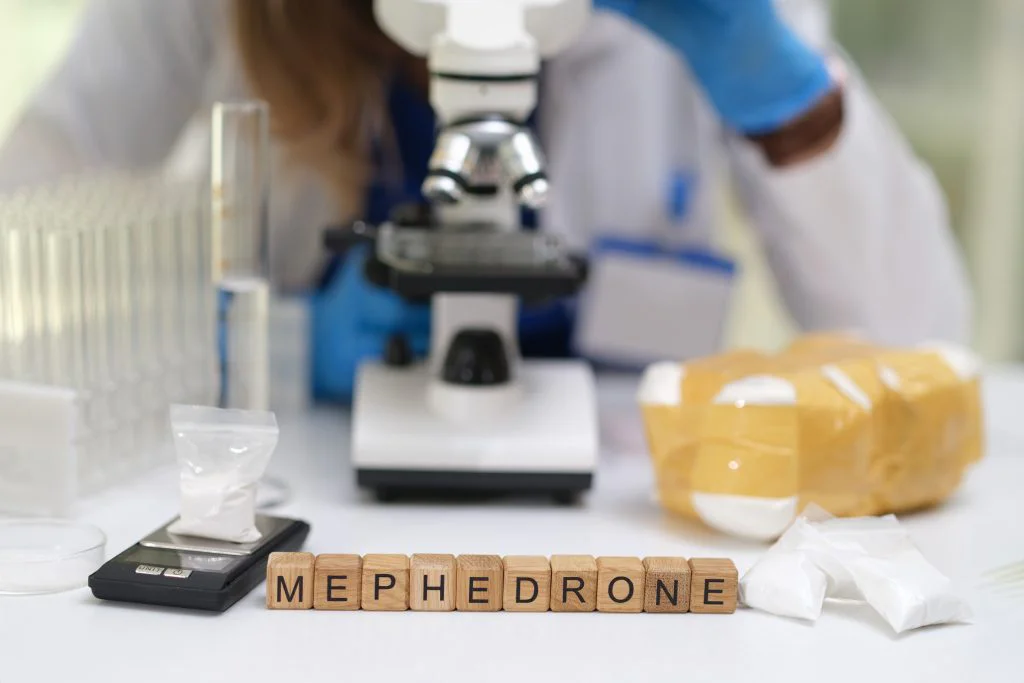
Most people think of mephedrone as a relic of the early 2010s, back when it was sold openly as a “legal high”. The truth is, it’s still around, it’s still cheap, and still every bit capable of causing mephedrone addiction: a psychological dependence on a synthetic stimulant that creates an intense but short-lived high, often leading to repeated re-dosing, strong cravings and compulsive use.
For adults in the UK struggling with mephedrone use, or worried about a loved one, this page explains what mephedrone is, the signs and symptoms of addiction, its short- and long-term effects, what mephedrone withdrawal can look like and how long it may last, why the drug still matters in the UK today, and the treatment options available, including rehab and behavioural therapies. Because mephedrone remains accessible and harmful, and economic pressure can push people towards cheaper drugs, getting clear information and the right help quickly can make a real difference.
Mephedrone is a synthetic stimulant in the synthetic cathinone family of drugs. These are man-made versions of a stimulant found naturally in the khat plant.
In its most basic sense, mephedrone is a lab-made ‘upper’ that speeds up the messages travelling between brain and body.
Mephedrone usually comes as a white powder, crystal, pill, or capsule and is snorted, wrapped in cigarette paper and swallowed, or injected. A small number of people inject it, which has the biggest risks of all methods.
The Guardian reported how mephedrone had its moment in the spotlight between 2007 and 2010, when it was sold openly online as a “legal high” and commonly referred to as “meow meow”.2 Dealers labelled it “plant food” and marked it “not for human consumption” to dodge laws. It was cheap, easy to get, and for a period of time, legal, which made it hugely popular in the UK nightlife scene.
Mephedrone was legal in the UK until 2010, when a ban led to it being classified as a Class B drug under the Misuse of Drugs Act 1971.
Mephedrone has the potential to become very addictive, but it’s slightly different in comparison to becoming addicted to drugs like alcohol or heroin.
Mephedrone works by flooding the brain and disrupting dopamine and serotonin levels, which can produce feelings of euphoria and increased energy.3 The high is intense but short-lived, and that quick peak-and-crash cycle often drives the urge for more mephedrone.
In fact, once a session on mephedrone begins, stopping becomes difficult, which leads people to re-dose again and again to chase the feeling.
Of course, this doesn’t mean you’ll become addicted after taking the drug for the first time, but it shows on a biological level how the door can be left wide open for problems to begin if restraint isn’t used, especially given its addictive potential and the way it can disrupt serotonin levels.
In fact, surveys of users have found strong cravings, during and after using, to be the single biggest problem associated with mephedrone. A large share of regular users show signs of compulsive use.
Spotting the signs and symptoms of mephedrone use can be difficult, especially if you’re unsure what to look for. But if you suspect mephedrone usage in your loved one, and you’re worried about them, it’s worth understanding them.
Frequent nosebleeds from snorting
Weight loss from a suppressed appetite
Sweating
Jaw clenching
Teeth grinding
Disrupted sleep
Low mood that deepens during comedowns, while persistent use can also contribute to depression and other mental health issues
Mood swings
Anxiety or paranoia, with longer-term use raising the risk of anxiety disorders
Seek professional help if severe mental health symptoms appear.
Secrecy or defensiveness when asked about use
Neglecting responsibilities at work, at home or in daily routines
Spending large amounts of money on nights out
Pulling away from friends and damaging close relationships
Granted, many of the signs from the first two sections here are signs that you may notice if the person is currently using, or has just stopped using mephedrone. Using it occasionally, or as a one-off, doesn’t suggest an addiction is at play. But, if anything in the behavioural section is recognisable, it’s something worth exploring further and can help identify mephedrone addiction signs early.
In the short term, mephedrone produces a mixed bag of effects, some of which are why people take it, but others are effects people certainly don’t want. These mephedrone side effects can become especially dangerous during binges or when the drug is mixed with other substances.
The ‘wanted’ effects include:
Euphoria
Increased energy
Confidence
Talkativeness
A feeling of closeness to others
The unwanted, common side effects include:
Jaw clenching
Teeth grinding
Racing heart
Sweating
A loss of appetite.
Higher doses can tip into anxiety, paranoia, extreme agitation, overheating, and overdose.
A controlled study of the drug found it raised blood pressure, heart rate and body temperature, which is part of why mixing it with alcohol or other stimulants is so risky. Regular use can also lead to heart problems and high blood pressure, increasing the risk of heart attacks. One distinctive sign of its effect on circulation is cold or blue-tinged fingers. A mephedrone overdose can involve chest pain and seizures and needs urgent medical help.
The long-term picture is much harder to pin down and this is due to the law behind it. Mephedrone is a relatively new drug, and it was banned before much long-term research could be done. Regular use can affect both physical and psychological health over time. This means that a lot of what we know comes from users themselves, rather than large studies.
Still, one survey of people who had used it found more than half reported at least one issue linked to longer-term mephedrone abuse or mephedrone dependency.
If you’ve read this far with the underlying assumption that mephedrone is a drug of the past, it would be half right. Mephedrone did have its peak in the early 2010s, and use has fallen steadily since. But that doesn’t mean the problem of mephedrone addiction goes away. It’s still possible and closer than you think.
Recent on-the-ground documentaries have followed mephedrone’s resurgence in other parts of the world, where it’s still cheap and easy to find. The most concerning aspect of this resurgence, though, is the method in which it’s taken.
When mephedrone hit its peak in the UK, the most common method was to snort the powder. Currently, in other parts of the world, it’s more commonly injected, which increases the risk of dependence, as well as the spread of blood-borne viruses.
The reason it’s worth watching comes back to cost. Mephedrone’s original appeal in the UK was that it delivered cocaine, MDMA and amphetamine effects for a fraction of the price. That equation hasn’t changed, and in a period where money is tight and cheaper alternatives look tempting, the conditions that drove mephedrone’s first surge are very much in place.
One setting where mephedrone appears to this day is the chemsex scene. This is where certain drugs are used to enhance or sustain sex. Alongside drugs like meth and GHB, mephedrone is also commonly used in this scene.
The confidence, raised libido, and the loss of inhibition that mephedrone creates can all feed into the appeal of this setting.
Of course, chemsex is molded around many things beyond drugs, but when a positive association is made with mephedrone consistently through repeated exposure in drug-using social environments, it becomes a risk factor for addiction.
If you, or a loved one, has been taking mephedrone frequently, whether that be in the party scene or in the chemsex scene, it’s worth pausing for a moment to assess your relationship with the drug.
Ask yourself:
Do you regularly use more than you planned to?
Have you tried to cut down or stop and found it too difficult?
Do you continue to use despite it causing issues in your life?
Do you spend a large portion of your time using mephedrone or recovering from comedowns?
Do you experience low mood or cravings when you stop?
Repeated problems like these can develop into full-blown addiction if they are ignored.
If you recognise yourself in these questions, it’s worth acting now rather than waiting for things to get worse.
Recognising the problem is the hardest part, and you’ve just done it. Mephedrone dependence rarely improves on its own, and the longer it goes on, the tighter its grip becomes.
You don’t need to have hit crisis point to reach out. Whether it’s you or someone you love, our team can talk you through what help looks like, today, in complete confidence.
Contact PCP Rehab Today to speak to someone who understands.
Before we continue, it’s worth noting that currently, there’s no official medical timeline for mephedrone. But what the evidence does show is that mephedrone’s comedown and withdrawal closely resemble that of other stimulant withdrawal symptoms.
Because it’s a fast-acting stimulant with a short half-life, it follows a familiar pattern of quick crashes, low moods and fatigue within a few days and gradual recovery across the first week.
The symptoms below are drawn from the small number of studies that do exist, alongside what is known about stimulant withdrawal in general.
The aim here is to provide you with more information, so that if you do go through mephedrone withdrawal, you’re in a better position of knowing what to expect.
The crash usually begins within 6 to 24 hours of the last dose, and people may experience symptoms such as fatigue, irritability, anxiety, sleep disturbance, and appetite rebound. As the drug leaves the system, energy drops away and mood starts to dip. Cravings begin early.
Symptoms peak during this stage and you can expect tiredness, low mood, anxiety and irritability. Some report paranoia and poor concentration with strong cravings.
One study found that negative mood in mephedrone withdrawal stayed elevated for around four days after use, which fits what users describe as the hardest stretch.
This is the stage where the worst of the mephedrone withdrawal starts to pass. Mood and energy slowly return, and sleep begins to settle. Cravings may reduce, but are still present.
By the end of the first week, many people report feeling closer to themselves again.
Most people have largely recovered within one to two weeks. Any lingering symptoms are usually mild, such as occasional low mood, patchy sleep or the odd craving, particularly in heavier users. Protracted symptoms lasting well beyond this are rarely documented.
Help for mephedrone use in the UK is free, and mephedrone addiction treatment can begin in more than one way.
Most local drug services accept self-referrals, which means you can approach them directly without going through a GP first. FRANK offers confidential advice and can point you towards local support, and a GP can refer you on and help with any related health problems.¹
Because dependence on mephedrone is mainly psychological, treatment focuses on the mind rather than a medical detox. There is no medication specifically approved for mephedrone dependence, so mephedrone addiction treated well usually relies on therapy, with medical supervision where detox symptoms or mental health risks need monitoring.
Cognitive behavioural therapy is a common addiction treatment approach for mephedrone and helps people understand their triggers and build ways to cope with them.
Motivational interviewing works with a person’s own reasons for change.
Relapse prevention and, in some cases, contingency management, which rewards progress, are also used.
Group therapy and ongoing support can also help recovery by providing peer connection and structure.
For heavier or more entrenched use, residential rehab offers time away from the triggers of daily life. It can be particularly valuable for chemsex-related use, where mixing the substance with other substances increases risk and specialist support that understands the sexual context makes a real difference. Where mental health problems sit alongside the drug use, mephedrone addiction can be linked to underlying causes such as self-medication or prior problems with other drugs, so treating both together matters.
Taking in all of this at once is a lot, and you don’t need to arrive at this point feeling certain about what you want or what should happen next. Many people reach out simply to talk things through and understand their options, without making any immediate decisions.
At PCP, that starting point is a confidential assessment that helps build a clearer picture of your situation, including your mephedrone use, wider substance use history, your wellbeing, and any risks or mental health issues that may need support. From there, the right kind of support can be discussed, whether that’s community help or a stay with us. Cost of rehab in London and other parts of the UK can be discussed.
PCP provides drug and alcohol detox and rehabilitation within a safe, CQC-registered facility in Luton, Bedfordshire, supporting people from across the UK. If you’d like to understand what treatment looks like and whether it fits your situation, contact us today to find out how the team can help you overcome mephedrone addiction. There’s no obligation to make a decision on the call.
In its effects, yes. Molly is another name for MDMA, and like mephedrone, it lifts mood and energy while creating a feeling of warmth towards others. But they’re different drugs from different chemical families, and mephedrone’s shorter high tends to drive more repeat dosing in a session.
Mephedrone is a stimulant that acts on the brain chemicals behind reward and alertness, mainly dopamine, along with noradrenaline and serotonin; it increases dopamine and serotonin levels by boosting their release and blocking their reabsorption, and although it was once sold as a legal high, it is now an illegal substance.
The dopamine effect drives the stimulant hit, and it’s closely tied to the drug’s addictiveness.
We don’t fully know yet, as it was controlled before long-term studies could be done. Reported effects point to problems with memory and mood, with some users describing anxiety and mental fog after stopping. The early signals are enough to take seriously.
Mephedrone has strong addictive potential and carries a high risk of psychological addiction. Its short, intense high pushes people to redose repeatedly, building tolerance and compulsive use fast. genetic predisposition can influence vulnerability in the same way people inherit other traits, although environment still matters too. Cravings are the most commonly reported problem, and while the dependence is mainly psychological, that doesn’t make it any easier to break.
| Cookie | Duration | Description |
|---|---|---|
| cookielawinfo-checkbox-analytics | 11 months | This cookie is set by GDPR Cookie Consent plugin. The cookie is used to store the user consent for the cookies in the category "Analytics". |
| cookielawinfo-checkbox-functional | 11 months | The cookie is set by GDPR cookie consent to record the user consent for the cookies in the category "Functional". |
| cookielawinfo-checkbox-necessary | 11 months | This cookie is set by GDPR Cookie Consent plugin. The cookies is used to store the user consent for the cookies in the category "Necessary". |
| cookielawinfo-checkbox-others | 11 months | This cookie is set by GDPR Cookie Consent plugin. The cookie is used to store the user consent for the cookies in the category "Other. |
| cookielawinfo-checkbox-performance | 11 months | This cookie is set by GDPR Cookie Consent plugin. The cookie is used to store the user consent for the cookies in the category "Performance". |
| viewed_cookie_policy | 11 months | The cookie is set by the GDPR Cookie Consent plugin and is used to store whether or not user has consented to the use of cookies. It does not store any personal data. |