
The hardest addiction to admit is often the one that hides behind a functioning career.
You still hit your targets, still show up, still look fine on paper and that’s exactly what makes a high-functioning alcohol or drug problem so easy to keep going, and so hard to confront.
If you’re a working professional in London weighing up treatment, your two biggest worries are usually the same: confidentiality and time.
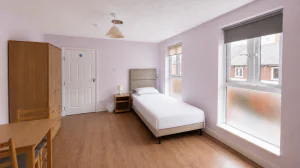
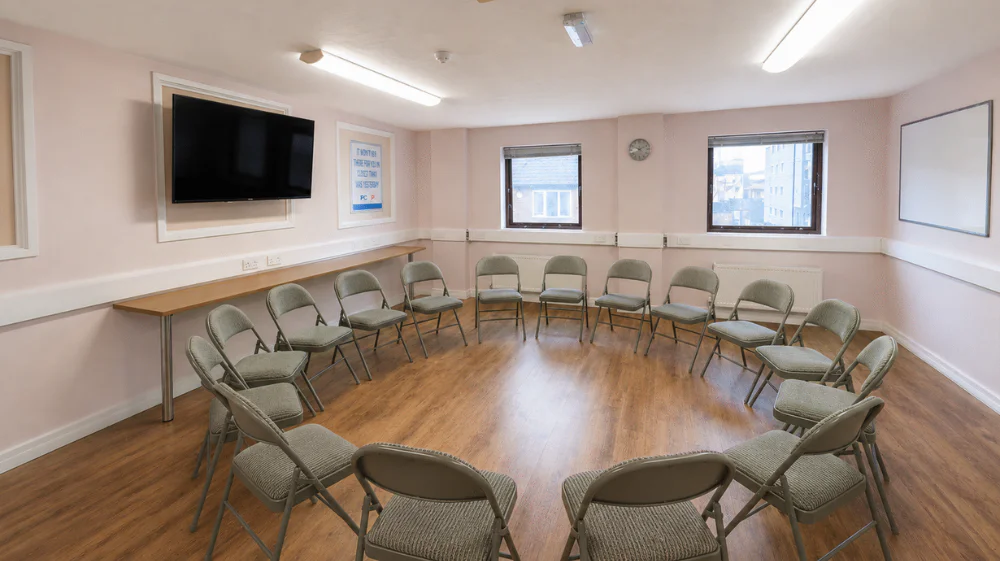
This guide is about how discreet residential rehab actually works for people who can’t simply disappear for a month, and why our 9-bed Clapham centre is built for exactly this.
A high-functioning alcoholic or drug user is someone whose dependence hasn’t yet visibly derailed their work or home life.
The job still gets done, so the problem stays invisible often for years.
That invisibility is the trap. Without an obvious crisis to force the issue, it’s easy to tell yourself things are under control, right up until they aren’t.
By the time a professional reaches out, the dependence is usually well established and the drinking or drug use has quietly become the thing holding the day together, rather than an escape from it.
It’s a pattern we see across South West London’s professional demographic in particular, where functional alcohol and cocaine use is a genuine local driver.
“Discreet” gets used loosely in this industry, so here’s what it means in practice at a proper residential clinic.
It means a small, unbranded residential setting with no signage advertising what it is. It means controlled access, confidential admission, and staff bound by strict confidentiality. And crucially, it means a small number of fellow clients.
This is where clinic size matters more than most people realise. In a large hospital-style rehab, the odds of encountering someone you know (a colleague, a client, an acquaintance) are simply higher.
In our 9-bed Clapham centre, you’re one of a handful of people, all there for the same reason. That deliberate cap is a genuine privacy feature, not just a comfort one.
For London professionals, location is practical, not incidental. Being treated close to home and work means family can visit, and the transition back to work is shorter.
Our Clapham centre sits in Zone 2, a few minutes from Clapham Common and Clapham South on the Northern Line. From there it’s around 15 to 20 minutes to the City (Bank and Moorgate), and roughly half an hour to Canary Wharf.
No other PCP location can credibly offer this. Luton, Cardiff and Leicester aren’t commutable for someone whose life is anchored in Central or East London. Clapham is.
Not unless you tell them. There is no mechanism by which an employer is automatically informed that you’ve entered treatment, and your medical information is confidential.
If you need time off, a GP fit note certifies that you’re unfit for work without naming addiction, it will typically cite a condition such as “stress-related illness” rather than the specifics. What your employer needs to know and what they’re entitled to know are two different things.
Many professionals also have annual leave, sabbatical or flexible arrangements that cover a two-to-four week programme. We’ve written more on your rights in our guide to disclosing addiction at work.
You’ll see the phrase “executive rehab” a lot, usually attached to spa facilities, private chefs and a hefty price tag. It’s worth separating the useful part from the marketing.
The part that genuinely matters for a professional is clinical quality, real confidentiality, and a high staff-to-client ratio, the things that drive recovery and protect your privacy. Gold taps don’t.
Our Clapham model delivers the substance of “executive” care, one of the highest counsellor-to-client ratios in UK private rehab, in a discreet setting without pricing it as a luxury product.
For what that actually costs, see our guide to the cost of rehab in London.
One practical advantage for working people: our minimum stay is two weeks, not a fixed 28 days. That makes treatment feasible around annual leave or a shorter period of sick leave, with the option to extend if clinically needed.
A residential programme removes you from the triggers and routines that sustain the addiction (the client dinners, the commute drink, the home-office bottle) in a way that outpatient care around a full workload rarely can.
For professionals whose drinking has become physically dependent, that clean break, with medical supervision, is often the difference between another failed attempt and a real one.
Sometimes the decision comes to a head fast, a health scare, a near-miss at work, a moment of clarity that might not last. In those situations, waiting weeks for a free service isn’t realistic.
Where it’s clinically appropriate, we can arrange admission to our Clapham centre within 24 hours. That speed is often what makes treatment happen at all, before the window closes.
Recovery doesn’t end at discharge, and for a professional the return to work is a real test. This is where structured aftercare matters.
Every client who completes treatment with us is enrolled in our free lifetime aftercare programme, which includes regular telephone support and group meetings.
For those who’d benefit from a longer step-down before full independence, our secondary programme bridges the gap between primary rehab and everyday life.
The aim is straightforward: you go back to your career with support in place, not straight back into the environment that fuelled the problem. You can read more about how ongoing support works in our aftercare programme.
Can my employer find out I went to rehab?
No, not unless you choose to tell them. Your medical information is confidential, and a GP fit note certifies you’re unfit for work without naming addiction, it usually cites something like “stress-related illness.” What an employer is entitled to know is far less than many people fear.
How do high-functioning alcoholics get treatment?
Often privately and discreetly, because the problem isn’t yet visible enough to force the issue. A confidential residential programme works well because it removes the person from the routines sustaining the addiction. Admission can be self-referred no GP referral is required.
What is executive rehab?
“Executive rehab” usually means residential treatment marketed to professionals, often with luxury extras and premium pricing. The parts that actually matter (clinical quality, confidentiality and a high staff-to-client ratio) don’t require luxury add-ons, and are available at a fraction of the cost.
How do I take time off work for rehab?
Many professionals use annual leave, a sabbatical, or a period of certified sick leave. A GP can issue a fit note without naming addiction. Our two-week minimum stay makes treatment feasible around a shorter leave period, with the option to extend if needed.

Perry is the founder of Rehab Today by PCP and opened the first treatment centre at Luton in 2004.
Perry’s background apart from his own personal struggle with addiction over 20 years ago is in the recruitment industry where he started his career and became Finance Director of a UK PLC and in the late 90’s was part of a new start up and became the leading recruitment consultancy in Intellectual Property across Europe.
Perry is passionate about recovery from addiction and liaises with family members to coordinate admissions, often sharing his own experience to help people when they first admit into treatment. Most certainly the driving force behind the success of Rehab Today by PCP which now boasts 60 primary and 68 move on beds in all locations. Perry is a keen fitness fanatic and Arsenal fan!
| Cookie | Duration | Description |
|---|---|---|
| cookielawinfo-checkbox-analytics | 11 months | This cookie is set by GDPR Cookie Consent plugin. The cookie is used to store the user consent for the cookies in the category "Analytics". |
| cookielawinfo-checkbox-functional | 11 months | The cookie is set by GDPR cookie consent to record the user consent for the cookies in the category "Functional". |
| cookielawinfo-checkbox-necessary | 11 months | This cookie is set by GDPR Cookie Consent plugin. The cookies is used to store the user consent for the cookies in the category "Necessary". |
| cookielawinfo-checkbox-others | 11 months | This cookie is set by GDPR Cookie Consent plugin. The cookie is used to store the user consent for the cookies in the category "Other. |
| cookielawinfo-checkbox-performance | 11 months | This cookie is set by GDPR Cookie Consent plugin. The cookie is used to store the user consent for the cookies in the category "Performance". |
| viewed_cookie_policy | 11 months | The cookie is set by the GDPR Cookie Consent plugin and is used to store whether or not user has consented to the use of cookies. It does not store any personal data. |