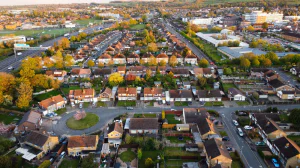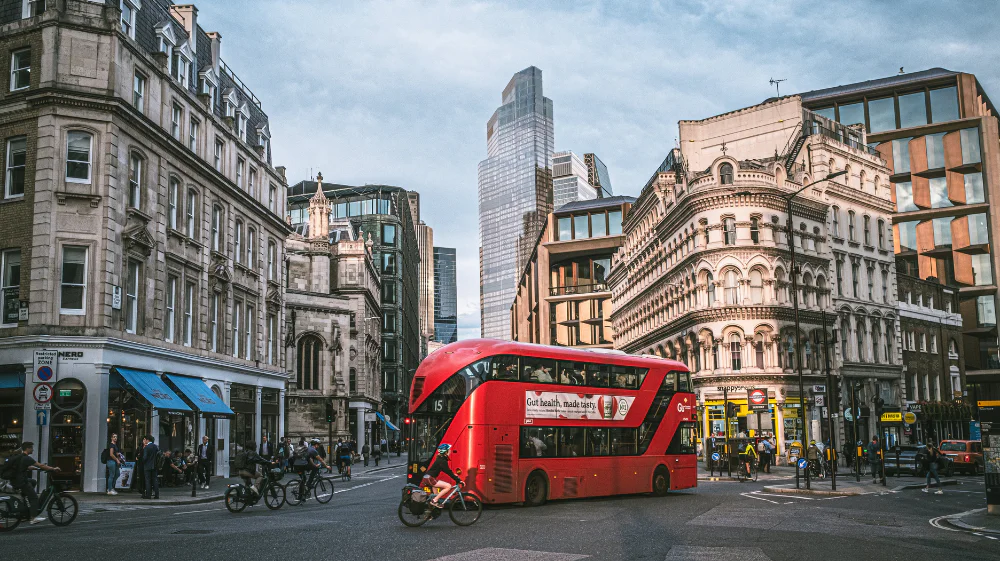
South West London is not a uniform place when it comes to addiction. The four boroughs our Clapham centre serves most (Lambeth, Wandsworth, Southwark and Lewisham) sit in the part of the capital where drug-related deaths have risen sharply, and where high-functioning alcohol and cocaine use often hides behind a busy professional life.
This piece looks at what the current data actually says about addiction in this corner of London, using ONS and OHID figures rather than guesswork. We run a residential rehab in Clapham, so this is the catchment we see every day.
For the city-wide picture, we’ve covered London’s drug problem as a whole separately. Here, the focus is local.
In 2024, the four South West London boroughs around Clapham (Lambeth, Wandsworth, Southwark and Lewisham) recorded 111 drug-misuse deaths between them, part of a London total of 662. Every one of these boroughs saw deaths rise year on year.
That local rise mirrors a citywide one. London recorded the largest increase in drug-poisoning deaths of any English region in 2024.
The number isn’t abstract. It’s roughly two deaths a week across four boroughs, in people who were someone’s partner, parent or neighbour.
Here’s how drug-misuse deaths in the Clapham catchment changed between 2023 and 2024, from the ONS local-authority dataset.
| Borough | 2024 deaths | 2023 deaths |
|---|---|---|
| Wandsworth | 30 | 25 |
| Southwark | 30 | 26 |
| Lambeth | 26 | 24 |
| Lewisham | 25 | 22 |
Two things stand out. Wandsworth’s figure rose by a fifth in a single year, and all four boroughs moved in the same upward direction, this isn’t a blip in one area.
These four boroughs alone account for around one in six of all London’s drug-misuse deaths, despite covering a small slice of the city’s geography.
A borough-level rise doesn’t have a single cause, but a few patterns are specific to this part of London.
High-functioning professional use. Much of South West London is affluent and time-poor. Alcohol dependence and recreational cocaine use are common here in people who hold down demanding jobs and don’t fit the stereotype of addiction which is exactly why it goes unaddressed for years.
A busy late-night economy. Clapham High Street, Brixton and Vauxhall are among the densest nightlife zones in the capital. Heavy alcohol use and party drugs are woven into that economy in a way they simply aren’t in quieter boroughs.
Cocaine’s normalisation. Cocaine use in London cuts across social classes, and South West London’s professional demographic is squarely part of that. We’ve written more on how cocaine addiction takes hold even in otherwise stable lives.
Drug deaths grab the headlines, but alcohol does quieter, broader damage. Across England, 342,795 hospital admissions in a single year were wholly attributable to alcohol: a rate of 626 per 100,000 people, according to OHID’s Local Alcohol Profiles for England.
In South West London, alcohol harm tends to follow two very different paths. One is visible and entrenched, often alongside homelessness and street drinking. The other is hidden, sitting behind the front doors of professionals who drink heavily but functionally.
The second group rarely shows up in crisis statistics until something forces the issue – a health scare, a relationship breakdown, a near-miss at work. By then the dependence is well established.
South West London is also home to one of the UK’s most significant chemsex landscapes, centred on the Vauxhall scene. Chemsex (the use of drugs like GHB/GBL, crystal meth and mephedrone to facilitate sex) carries serious physical and psychological risks, and it’s a genuine local demand driver that the citywide numbers don’t capture.
We’ve covered this in depth in our piece on chemsex in London’s gay scene. It matters here because it’s specific to this catchment in a way it isn’t to most of the country.
The free, NHS-commissioned services in these boroughs carry the bulk of this demand. Lambeth and Wandsworth both run consortia led by South London and Maudsley NHS Foundation Trust; Southwark and Lewisham are run by the charity Change Grow Live.
These services are good at long-term community support, but they’re stretched, and they’re overwhelmingly outpatient. We’ve set out the full picture, including how to access each, in our guide to free drug and alcohol rehab in London.
For many people, community-based support is the right level of care. For others (particularly where there’s physical dependence on alcohol or opioids) it isn’t fast or intensive enough.
Stopping drinking suddenly when you’re physically dependent can be medically dangerous, which is why a supervised detox matters. When the risk is high or community treatment hasn’t worked, residential rehab removes someone from their environment and provides round-the-clock medical care.
Our Clapham centre sits in the middle of these four boroughs and can typically arrange admission within 24 hours. A confidential conversation with our team costs nothing and if a free local service is the better fit, we’ll say so.
Behind every figure on this page is a person, not a statistic. Addiction in South West London cuts across wealth, postcode and profession, and the data isn’t a judgement on anyone caught up in it. If you recognise yourself or someone you love in any of this, that recognition is the hardest and most important step.
Which London boroughs have the highest drug-related deaths?
In 2024, inner London boroughs including Camden, Islington, Southwark and Wandsworth recorded some of the highest counts. Across South West London, Wandsworth and Southwark each recorded 30 drug-misuse deaths, with Lambeth on 26 and Lewisham on 25, according to ONS data.
Is drug use rising in South West London?
Yes. Drug-misuse deaths rose year on year across all four South West London boroughs around Clapham between 2023 and 2024, mirroring London’s record 662 drug-poisoning deaths in 2024 — the largest regional increase in England and Wales.
What is the most common addiction in South London?
Alcohol remains the most widespread, followed by cocaine and opiates. South West London sees a particular mix of high-functioning professional alcohol and cocaine use alongside more entrenched dependence, plus a significant chemsex landscape centred on Vauxhall.
Where can I get help for addiction in South West London?
Free, NHS-commissioned services run in every borough – Lambeth and Wandsworth through South London and Maudsley-led consortia, Southwark and Lewisham through Change Grow Live. For faster or residential care, private clinics like our Clapham centre can admit within 24 hours.
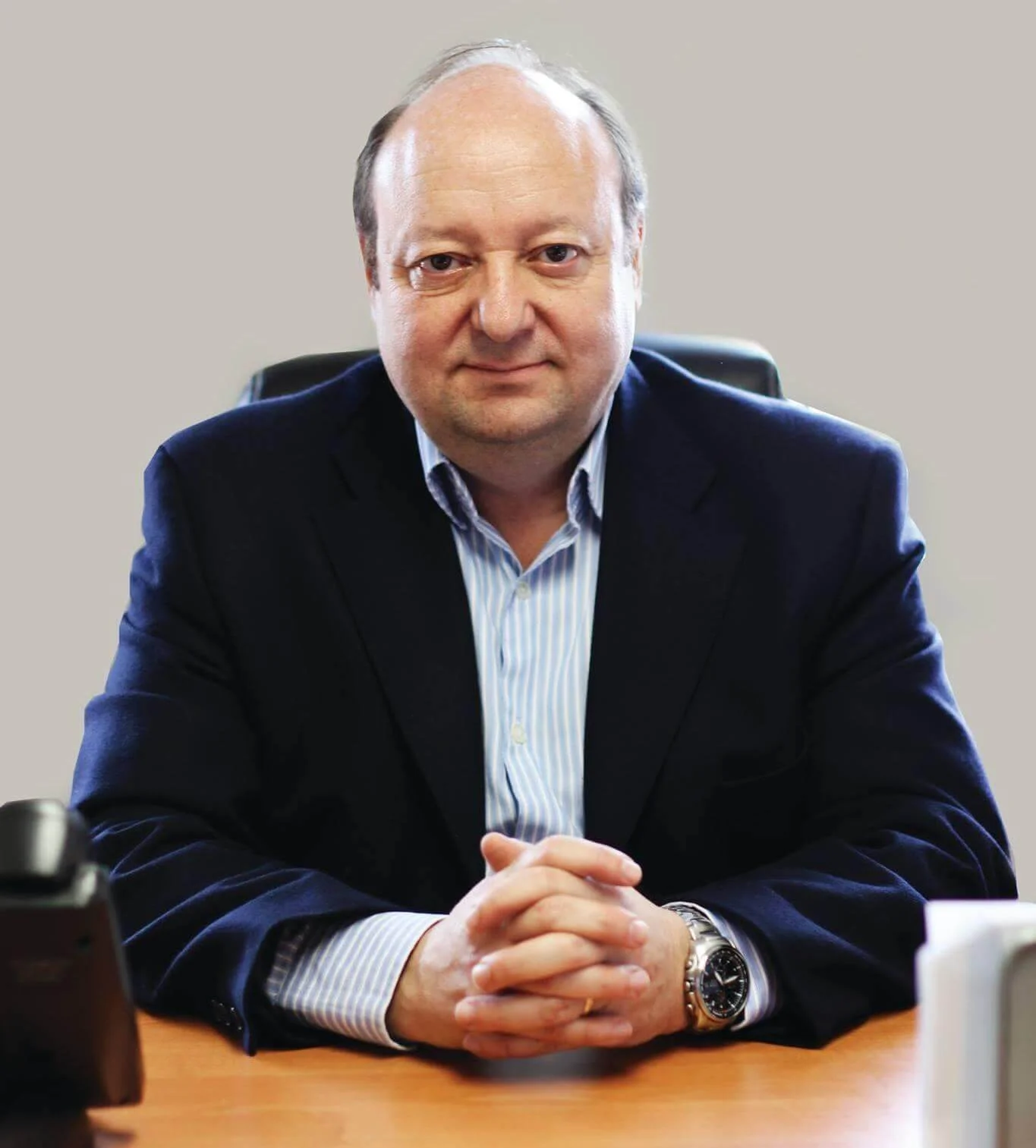
Perry is the founder of Rehab Today by PCP and opened the first treatment centre at Luton in 2004.
Perry’s background apart from his own personal struggle with addiction over 20 years ago is in the recruitment industry where he started his career and became Finance Director of a UK PLC and in the late 90’s was part of a new start up and became the leading recruitment consultancy in Intellectual Property across Europe.
Perry is passionate about recovery from addiction and liaises with family members to coordinate admissions, often sharing his own experience to help people when they first admit into treatment. Most certainly the driving force behind the success of Rehab Today by PCP which now boasts 60 primary and 68 move on beds in all locations. Perry is a keen fitness fanatic and Arsenal fan!
| Cookie | Duration | Description |
|---|---|---|
| cookielawinfo-checkbox-analytics | 11 months | This cookie is set by GDPR Cookie Consent plugin. The cookie is used to store the user consent for the cookies in the category "Analytics". |
| cookielawinfo-checkbox-functional | 11 months | The cookie is set by GDPR cookie consent to record the user consent for the cookies in the category "Functional". |
| cookielawinfo-checkbox-necessary | 11 months | This cookie is set by GDPR Cookie Consent plugin. The cookies is used to store the user consent for the cookies in the category "Necessary". |
| cookielawinfo-checkbox-others | 11 months | This cookie is set by GDPR Cookie Consent plugin. The cookie is used to store the user consent for the cookies in the category "Other. |
| cookielawinfo-checkbox-performance | 11 months | This cookie is set by GDPR Cookie Consent plugin. The cookie is used to store the user consent for the cookies in the category "Performance". |
| viewed_cookie_policy | 11 months | The cookie is set by the GDPR Cookie Consent plugin and is used to store whether or not user has consented to the use of cookies. It does not store any personal data. |