If you’re looking for an alcohol detox in London, the most important thing to know first is this: if you’re physically dependent on alcohol, stopping suddenly on your own can be dangerous, and a medically supervised detox exists to keep you safe.
This guide explains what an alcohol detox in London actually involves, how long it takes, what it costs, and the difference between the NHS, home and private residential routes.
We run a residential detox and rehab clinic in Clapham, so this is the process we manage every day.
A medically supervised alcohol detox is the process of safely clearing alcohol from your body while doctors and nurses manage the withdrawal symptoms.
It’s the essential first stage of treatment for anyone who has become physically dependent on alcohol.
The medical supervision is the point. Withdrawal from alcohol dependence can cause seizures and a life-threatening condition called delirium tremens, and medication given during a supervised detox controls those risks.
Detox on its own isn’t a cure for addiction.
It clears the physical dependence so that the real work (therapy and recovery) can begin.
For most people, the acute phase of an alcohol detox lasts between 3 and 7 days.
Withdrawal symptoms typically begin 6 to 12 hours after your last drink, peak around 24 to 72 hours, and then ease.
An NHS inpatient detox usually runs for 7 to 10 days, according to NHS guidance.
Some psychological symptoms, like disrupted sleep or low mood, can linger for a few weeks, especially after heavy long-term drinking.
At our Clapham clinic, detox is the first stage of a residential stay, with a two-week minimum that allows detox and the start of therapy to happen in one continuous programme.
This is the part people most need to hear. For someone who is genuinely alcohol dependent, an unsupervised home detox carries real medical risk not just discomfort.
The danger is that severe withdrawal can escalate quickly. The NHS advises calling 999 or going to A&E if someone experiences severe withdrawal symptoms such as visible shaking, confusion, or extreme agitation after stopping drinking.
Delirium tremens, the most severe form of alcohol withdrawal, can be fatal without treatment.
That’s why we cover the risks of alcohol detox at home in detail separately, and why a supervised detox matters if your drinking is heavy and daily.
If you can have a drink to stop the shakes in the morning, that’s a sign of physical dependence, and a sign that detox should be medically managed.
There are three main routes to an alcohol detox in London, and the right one depends on how severe your dependence is and how quickly you need help.
NHS and community services. Free, and the starting point for many people. These are largely outpatient and community-based, commissioned borough by borough. Inpatient NHS detox beds exist but are limited and waiting lists can be long. We’ve mapped the free routes in our guide to free drug and alcohol rehab in London.
Home detox. Some private providers offer a community detox with medication and remote support. It can suit milder cases, but it isn’t appropriate where dependence is severe or there’s a history of seizures.
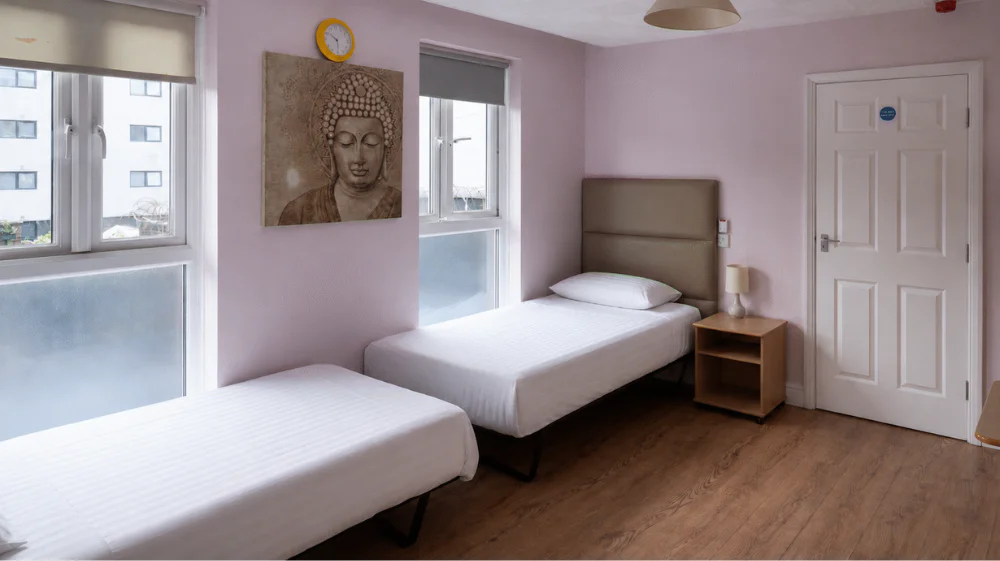
Private residential detox. You stay at a clinic with 24-hour medical cover throughout withdrawal. It’s the fastest and safest route for anyone with significant dependence, and it flows straight into therapy rather than leaving you alone once the alcohol clears.
A private alcohol detox in London typically costs from around £1,500 to £5,000 per week, depending on whether it’s standalone or part of a full residential programme, and the level of the clinic.
Our Clapham centre charges £4,250 a week, with a two-week minimum stay (£8,500) that includes the medically supervised detox and the start of the therapy programme, not detox alone. NHS detox is free but access is slower.
For the full picture, including how the London market compares and how to fund treatment, see our guide to the cost of drug and alcohol rehab in London.
Detox clears the alcohol; it doesn’t address why the drinking took hold. This is the single biggest reason detox-only approaches so often end in relapse.
A proper programme moves straight from detox into therapy (one-to-one counselling, group work and relapse-prevention planning) so the psychological side is treated while the body recovers. At our Clapham centre, detox and therapy run as one continuous residential stay, followed by free lifetime aftercare.
That continuity is what turns a detox into lasting recovery, rather than a reset that fades in a few weeks.
If your drinking has reached the point of physical dependence, the safest next step is a medically supervised detox, not going it alone.
Our Clapham clinic is CQC regulated, staffed by in-house doctors and nurses, and can typically arrange admission within 24 hours where it’s clinically appropriate.
A confidential conversation with our team costs nothing and commits you to nothing and if a free NHS route is right for you, we’ll point you to it.
How much does alcohol detox cost in London?
A private alcohol detox in London typically costs from £1,500 to £5,000 per week. Our Clapham clinic is £4,250 a week with a two-week minimum stay, which includes the detox and the start of therapy. NHS detox is free but access is slower and largely outpatient.
Can you get an alcohol detox on the NHS in London?
Yes. NHS and borough-commissioned services offer alcohol detox, mostly on an outpatient basis, and it’s free. Inpatient NHS detox beds exist but are limited, with waiting lists. See our guide to free rehab in London for how to access these services.
How long does it take to detox from alcohol?
Withdrawal usually begins 6 to 12 hours after your last drink and the acute phase lasts 3 to 7 days, peaking around 24 to 72 hours. An NHS inpatient detox typically runs 7 to 10 days. Some psychological symptoms can last a few weeks.
Is it safe to detox from alcohol at home?
Not if you’re physically dependent. Severe alcohol withdrawal can cause seizures and delirium tremens, which can be fatal without treatment. The NHS advises seeking emergency help for severe withdrawal symptoms. A medically supervised detox is the safe route for heavy, daily drinkers.
Do I need rehab after an alcohol detox?
Detox clears the physical dependence but doesn’t treat the underlying causes, which is why detox alone often leads to relapse. A programme that moves from detox into therapy and aftercare gives the best chance of lasting recovery.
Clinical information on withdrawal timelines and emergency symptoms is based on NHS guidance (Alcohol-use disorder). Detox at PCP Clapham is delivered by an in-house medical team and regulated by the Care Quality Commission. Reviewed July 2026.
This article touches on alcohol dependence and withdrawal, which can be a distressing subject. If you’re worried about your own or someone else’s drinking, our team can help you find the right support.
| Cookie | Duration | Description |
|---|---|---|
| cookielawinfo-checkbox-analytics | 11 months | This cookie is set by GDPR Cookie Consent plugin. The cookie is used to store the user consent for the cookies in the category "Analytics". |
| cookielawinfo-checkbox-functional | 11 months | The cookie is set by GDPR cookie consent to record the user consent for the cookies in the category "Functional". |
| cookielawinfo-checkbox-necessary | 11 months | This cookie is set by GDPR Cookie Consent plugin. The cookies is used to store the user consent for the cookies in the category "Necessary". |
| cookielawinfo-checkbox-others | 11 months | This cookie is set by GDPR Cookie Consent plugin. The cookie is used to store the user consent for the cookies in the category "Other. |
| cookielawinfo-checkbox-performance | 11 months | This cookie is set by GDPR Cookie Consent plugin. The cookie is used to store the user consent for the cookies in the category "Performance". |
| viewed_cookie_policy | 11 months | The cookie is set by the GDPR Cookie Consent plugin and is used to store whether or not user has consented to the use of cookies. It does not store any personal data. |