


When discussions turn to high-functioning addictions, MDMA is rarely included. Its reputation as a club drug, or something people simply ‘grow out of,’ has pushed it outside the usual high-functioning addiction conversation. That perception has shaped how MDMA use is understood, and in many cases, why it’s overlooked.
However, the dangers of ecstasy are significant, including short-term risks such as hyperthermia, dehydration, and heart failure, as well as long-term effects like memory loss, mood swings, and changes to brain chemistry. These risks highlight the serious and unpredictable consequences of MDMA use, even for those who appear to be functioning well.
This page explores the idea of a high-functioning MDMA addiction, what it can look like, the early warning signs, and how to access appropriate support if any of this feels familiar.
High-functioning individuals with MDMA addiction may use their financial stability and professional success to rationalize their usage, making the dangers of ecstasy less obvious to themselves and those around them.
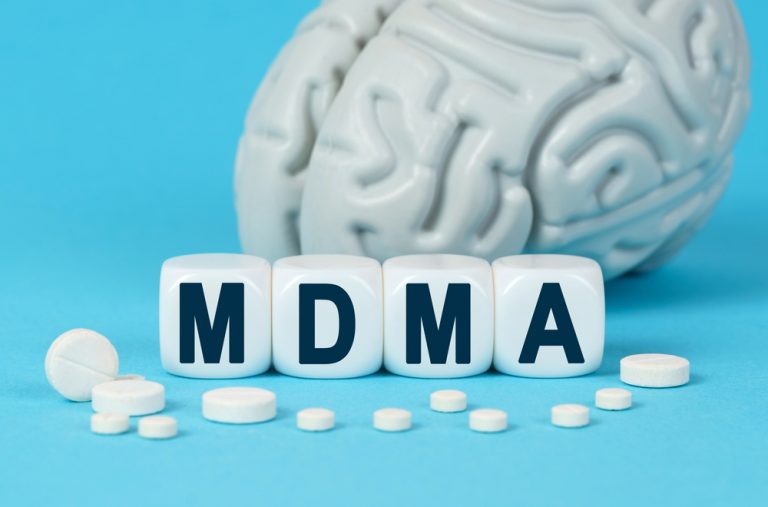
MDMA is ecstasy—a synthetic drug that acts as both a stimulant and a hallucinogen.1 When taken, it triggers significant releases of serotonin and dopamine, the brain chemicals involved in mood and reward.1
This is why people describe feeling emotionally open, socially connected, confident, or intensely uplifted while using it, making it easy to see why it gained the nickname ‘ecstasy’. With that in mind, it’s no surprise that ecstasy has become closely tied to the club and festival scenes, where large crowds gather, and a shared intensity can make its effects feel amplified.
Other street names include X, Molly, Mandy, or simply ‘pills’, and can come in powder or tablet form. Ecstasy is often called the ‘love drug’ because of its ability to create feelings of emotional closeness and bonding, though these effects can also contribute to addiction and negative consequences.
In the UK, MDMA is classified as a Class A drug under the Misuse of Drugs Act, which places it in the most serious legal category. MDMA is also classified as a Schedule I drug, indicating a high potential for misuse and no approved medical purpose.
Many ecstasy pills are contaminated with other substances, such as bath salts, methamphetamine, heroin, or dextromethorphan. The presence of these other substances makes the effects of ecstasy unpredictable and potentially dangerous.
Before focusing on MDMA misuse specifically, it helps to clarify what people usually mean when they talk about a “high-functioning” addiction. To be clear, this is not a clinical diagnosis. It’s a descriptive term used when someone appears to be coping well on the surface, even as their relationship with a substance becomes less healthy.
High-functioning addiction does not suggest a special tolerance or immunity to addiction. Instead, it reflects how well someone is able to maintain outward responsibilities while problems build beneath them. Continuing substance use despite negative consequences is a key sign of addiction, even if those consequences are not immediately visible.
A PubMed Centre paper identified these core attributes of a high-functioning addiction:
Continuing to meet work commitments
Maintaining good health
Keeping relationships intact
Managing substance use in a way that feels contained and supports sustainable sobriety
Because life is still functioning in the early stages of addiction, seeking help may feel unnecessary or easy to put off.
This is why we frequently hear of stories of professionals in high-pressure jobs who develop functioning cocaine or alcohol addictions to help deal with the stress of day-to-day life.
But what about MDMA? Is this an addiction that can become high-functioning?
As already discussed, high-functioning addiction isn’t a clinical term. So when you’re trying to work out whether it can apply to MDMA, you have to think a little differently and draw from other existing research about MDMA dependence and ecstasy use.
For example, studies exploring patterns of heavy MDMA and regular ecstasy use show how dependence-like behaviours can develop without any clear disruption to everyday life.
One study of heavy MDMA users (over 250 lifetime tablets) interviewed participants about their careers and relationships.
Key findings suggested that:
Two-thirds of participants were employed.
Most said that they used harm-reduction strategies in order to maintain their jobs and use MDMA.
This included limiting their MDMA use during busy working periods or changing their work hours to avoid working during a “comedown”.
Over half of the participants also reported that they were in stable, long-term relationships.
While these participants didn’t necessarily show the stereotypical signs of addiction, that doesn’t mean there aren’t any warning signs.
In the study, some individuals were adjusting their work schedules around MDMA use so that comedowns didn’t interfere with performance. Many users of MDMA may compartmentalize their lives to hide their addiction, often using the drug only on weekends or in private. When that level of planning sits alongside use that has reached 250 occasions or more, it starts to resemble something far more entrenched than casual experimentation. Regular ecstasy use can lead to entrenched patterns of ecstasy use, even if outward functioning is maintained.
If a person is repeatedly reshaping their routine to protect their ability to take a drug, that pattern sits uncomfortably close to how addiction tends to appear in its earlier stages.4 Recognising an ecstasy addiction is only the first step toward recovery.
If you’re still managing to hold down a job and maintain relationships, it can be easy to fall into the trap of thinking your MDMA use isn’t a problem. But functioning well doesn’t mean you’re not under strain. The effects of ecstasy and the effects of MDMA can be unpredictable, especially due to contaminants that may be present in the drug.
Every time you use MDMA, it places significant stress on your body and mind, but because the effects aren’t always immediate, they can easily go unnoticed. The ecstasy effects can vary in onset, duration, and intensity, and both the immediate and long-term effects of ecstasy and MDMA can impact brain chemistry, mental health, behaviour, and physical health—sometimes with severe or even fatal consequences.
This is one of the main drivers of high-functioning addiction: the belief that you’re fine because nothing obvious has gone wrong. The lack of visible signs of addiction in high-functioning individuals can delay seeking help until significant health damage occurs.
Below are some of the long-term effects linked to MDMA use, to show that just because you can’t see or feel the impact right away doesn’t mean it won’t become a problem in the future.
MDMA interferes with how the body regulates its temperature. Most severe cases of MDMA-related medical emergencies involve hyperthermia, with body temperatures reaching up to 43 degrees, alongside tachycardia and kidney injury. Hyperthermia can lead to brain swelling, which is potentially fatal. The leading cause of ecstasy-related deaths is hyperthermia, especially in warm environments like nightclubs, where physical activity and crowded conditions increase the risk.
Chronic users are known to attend raves where temperatures are high and alcohol use is common, both of which contribute to dehydration. Repeated episodes of hyperthermia can damage vital organs and muscle tissue, including the brain, liver, kidneys, and heart. Heavy MDMA users often suffer from bruxism (jaw clenching), sleep disturbances, and a weakened immune system.
Hyponatremia, also known as water intoxication, is a known risk when taking MDMA. MDMA-induced hyponatremia can lead to seizures, comas, and, in some cases, death.
Long-term users may repeatedly place themselves in situations where they experience at least mild hyponatremia, increasing the risk of chronic health complications and death.
When MDMA is taken alongside other drugs that also increase serotonin, such as cocaine or methamphetamine, it can overwhelm the brain’s serotonin system.5 Serotonin is a chemical that helps regulate mood and body temperature, and having too much of it at once can trigger serotonin syndrome, a medical emergency that can be fatal.
People who use MDMA regularly are more likely to mix substances, either intentionally (to enhance effects) or unintentionally (due to unknown pill contents). This significantly increases the risk of serotonin syndrome, particularly in hot environments or during long periods of dancing.
There is strong evidence showing that MDMA can cause serious cardiovascular and cardiac complications. Multiple NCBI studies state that these include:
Valvular heart disease
Arrhythmias
Cardiomyopathy
Cardiac hypertrophy
Cerebrovascular accidents
As with most MDMA-related harms, repeated exposure increases the risk of long-term and potentially severe damage to the body.
Studies have consistently found that in MDMA users specifically, attention switching, updating, working memory, and episodic memory are all impacted. These are the executive functions needed to complete difficult tasks, especially at work or school.11
High-functioning ecstasy users may be at risk for developing serious issues with their executive functions if they continue to use the drug for a long period of time. Difficulty concentrating is a common cognitive effect, especially after the drug’s effects wear off, and can persist with long-term ecstasy use. High-functioning individuals may also experience severe mood swings, including the ‘Tuesday Blues,’ which typically occur 2-3 days after use. After using ecstasy, many users experience a ‘crash’ marked by anxiety, depression, fatigue, and irritability.
Clinical research from Nature has found that long-term MDMA users show more impulsive behaviours, as well as poorer decision-making on risky tasks, compared to those who don’t take MDMA. These kinds of issues could put users in riskier situations, such as continued drug use or poor financial decisions.
Studies have shown that if a person repeatedly uses MDMA, it can harm the brain cells that use serotonin. This has the potential to leave the brain with fewer serotonin transporters, which act like recycling systems that help move serotonin in and out of brain cells.
Because of this damage, the brain can become less able to regulate mood, sleep, memory, and emotions properly. In the long term, this helps explain why heavy MDMA users are more likely to experience mental health issues such as depression or anxiety, even when they’re not using the drug. Long-term ecstasy use can contribute to the development of mental disorders, as classified in diagnostic manuals like the DSM-5. MDMA’s negative impact on serotonin levels can lead to psychological side effects that last for several days after use.
If you’re misusing MDMA regularly, or know someone who is, it’s important to understand that things can go wrong. When they do, being able to act quickly and decisively can make a real difference.
According to the NHS, symptoms such as extreme overheating, seizures, chest pain, collapse, severe agitation, or sudden confusion should always be treated as a medical emergency. These can be linked to hyperthermia, hyponatremia, serotonin toxicity, or acute cardiac complications.
If someone has taken MDMA and shows any of these signs, call 999 immediately and state that MDMA has been taken. Quick medical intervention can prevent permanent organ damage or death.
If symptoms are serious but not immediately life-threatening, such as persistent vomiting, severe headache, confusion, or irregular heartbeat, attending A&E is appropriate.
For non-emergency concerns, including worsening mood, anxiety, sleep disturbance, or concerns about repeated use, speaking to your GP is a sensible first step. You can also call 111 for urgent advice if you are unsure where to go. NHS 111 can direct you to local drug and alcohol services or crisis support if needed.
If the concern relates more to patterns of use rather than acute symptoms, confidential local drug and alcohol services can offer assessment and early intervention without judgement. PCP also provides confidential assessments for individuals who want clarity about their MDMA use and next steps including residential rehab treatment specialising in MDMA addiction.
A high-functioning pattern of MDMA use rarely develops on its own, and research shows that other factors can drive the usage and keep it consistent in a person’s life. High-functioning MDMA users may engage in secretive behaviour, such as hiding the drug at home and using it privately to avoid detection. Below are some of the most common points to consider:
Seeking professional help is essential for those struggling with high-functioning MDMA addiction, as continued use despite negative consequences can indicate a substance use disorder. Professional support, including online addiction and mental health counsellors, can provide tailored treatment options and behavioural therapies to address both the addiction and its long-term effects.
Family support plays a crucial role in helping individuals with ecstasy addiction. Families are encouraged to educate themselves about ecstasy addiction to better understand and support their loved ones. Encouraging open communication can help those affected feel more comfortable discussing their ecstasy use and seeking help. Additionally, support groups offer a valuable network for families to share experiences and coping strategies when dealing with a loved one’s ecstasy addiction.
One of the main reasons for this can be self-medicating for underlying mental health issues.
Research from the Journal of Clinical Medicine shows that people living with psychological distress, such as anxiety or depression, are more likely to turn to substances in an attempt to manage how they feel. If everyday life already feels emotionally strained, a drug like MDMA that can provide temporary relief can begin to look like a solution rather than a risk.
In fact, many MDMA users describe the drug as being enough to dull emotional pain, making it easier to communicate with others or simply ‘get through’ daily life.
The issue is that if taken long-term, it can worsen the very problems it’s used to escape from. MDMA depletes serotonin, which can exacerbate depression and, in some cases, even increase episodes of self-harm and suicidal thoughts.
If you’re reading this during a comedown and something about your mood or thoughts feels off, don’t ignore it. MDMA comedowns can intensify anxiety, low mood, or intrusive thoughts, and you don’t have to handle that alone.
In the UK, call NHS 111 for urgent advice if you’re unsure what to do next. If you feel at immediate risk or are thinking about harming yourself, call 999 straight away. Getting support early can make a real difference.
A NIH study found that cravings for MDMA are fairly common, even among recreational users. 16 Around half of the participants said they experienced some level of craving, while nearly one in three reported strong urges to use the drug.
People who used MDMA more frequently, or were exposed to reminders of it (such as certain places or people), tended to report stronger cravings.
Research shows that most people get MDMA through friends rather than strangers or dealers, which means it can enter your life through trusted social circles. The influence of friends doesn’t stop after the first time, either. One study of recreational users found that peer influence was the strongest factor in trying MDMA in the first place and stayed the main reason people kept using it.
Clinical and survey research shows that MDMA reliably increases feelings of sociability, emotional closeness, and empathy.18 People frequently describe taking MDMA to make social interactions feel easier or more meaningful, particularly in group settings. When a substance consistently improves how someone experiences connection with others, it becomes more likely to be reused in the same contexts.
If you’re reading this after learning about the hidden dangers of MDMA addiction, there’s a good chance you’re trying to avoid getting anywhere near that point. No one sets out to develop an MDMA addiction, but the early changes that lead there are easy to brush off, especially when you still feel high-functioning.
With this in mind, we have decided to present a mini self-assessment questionnaire that is centred around some of the early MDMA dependency signs. Noticing these signs sooner gives you the space to reflect and, if needed, reach out for professional support before things escalate.
Have you changed work or social plans to make space for MDMA use or to recover from comedowns?
Do you deliberately time your MDMA use so it does not interfere with work, study, or performance?
Are MDMA comedowns leaving you with low mood that affects the following days?
Have you noticed changes in your ability to concentrate since using MDMA more regularly?
Do some social situations feel harder to get through without taking MDMA?
Have you found yourself re-dosing during a session to keep the effects going?
Do thoughts about MDMA come up automatically when certain situations arise?
Withdrawal symptoms, including depression, anxiety, insomnia, and even hallucinations, are common when stopping ecstasy use. Therapy is very important for managing these post-acute withdrawal symptoms and supporting long-term recovery.
Keep in mind that this isn’t an official diagnostic tool. However, if you answered ‘yes’ to one or more of these questions, it may suggest that MDMA has started to play a bigger role in your life than you originally intended.
If you’re not experiencing any immediate medical risks, the next step is to speak to a local drug service specialist who can help you explore your relationship with MDMA in more depth. PCP offers an honest, confidential assessment that can clarify whether further support would be helpful and prevent things from becoming more difficult later on.
From there, you could be recommended for further treatment, which we’ll explore in the next section.
Coming to terms with the idea that you may need treatment for MDMA can feel unsettling. This is especially true if the drug has played a role in helping you feel more sociable or manage difficult internal emotions. Letting go of something that seemed to help, even temporarily, is not a simple decision.
If, after an assessment with PCP, it is recommended that you move forward with MDMA treatment in the UK, that recommendation can bring its own uncertainty. Below, we look at what MDMA addiction treatment aims to focus on.
Therapy sits at the centre of treatment for MDMA dependence because it gives you space to understand what’s driving the use in the first place. Rather than focusing only on stopping the drug, therapy looks at why it became necessary and what it was helping you cope with.
Here’s a look at some of the therapies used:
CBT helps you identify the thought patterns that have linked MDMA with confidence or emotional control. As an example, if anxiety disorders are driving the use, therapy focuses on building coping skills that feel steady without relying on a chemical boost.
Motivational Interviewing is effective in drug addiction because it works with ambivalence. Many high-functioning users feel torn about change and MI helps them to explore that conflict and strengthen their own reasons for stopping use.
Trauma-focused approaches can be used where unresolved trauma is driving the SUD. By safely processing past experiences, therapy reduces the emotional triggers that MDMA may have been used to manage.
Therapy also creates space for relapse prevention work to begin. This is a key part of maintaining sobriety because it prepares you for situations you will face outside of treatment.
You’ll likely learn:
Identifying trigger environments
Planning for high-risk social settings
Managing performance pressure without substance use
Developing alternative ways to regulate mood and connection
This is practical work. It looks at real-life scenarios, not abstract theory.
Completing treatment for MDMA use doesn’t mean you’re suddenly “fixed” or that dependence can never resurface. Life keeps moving, and with it come situations where MDMA once felt helpful or even necessary. That might be corporate networking events where confidence feels essential, university environments where nights blur into mornings, club scenes, or friendship groups where taking something is simply part of how people connect.
Aftercare is shaped around that reality and understands that you may be stepping back into these same environments. It focuses on helping you navigate those moments with confidence and self-trust, without slipping back into patterns that no longer serve you.
To do this, aftercare focuses on:
Ongoing outpatient therapy
Continued relapse prevention strategies
Structured check-ins
Peer support groups
Workplace planning to reduce exposure to high-risk situations
Confidential support pathways that protect professional reputation
Together, these elements form a wider picture, coming together to create a solid support network that continues well beyond the end of MDMA addiction treatment.
Many people arrive at this point feeling uncertain about whether their MDMA use really “counts” as a problem, or whether now is the right time to do something about it. You don’t have to make that decision alone and speaking with a professional can help you gain clarity without pressure.
At PCP, confidential assessments are used to explore your physical health, your psychological well-being, your pattern of MDMA use, and any risks that may be developing beneath the surface. This allows treatment options to be discussed in a way that reflects your individual situation, rather than steering you toward a one-size-fits-all approach.
If there is an immediate medical emergency, urgent help should be sought straight away. Otherwise, arranging a confidential assessment with the PCP team, either by phone or through the website form, can be the first steady step toward regaining balance in your life.
Disclaimer: The information provided here is for general guidance only and is not affiliated with or endorsed by the National Institute on Drug Abuse (NIDA). The National Institute on Drug Abuse is a biomedical research organization and does not provide direct medical or legal advice regarding drug abuse. For personalised support, please consult a qualified healthcare professional.
A high-functioning MDMA addiction describes someone who maintains relationships and daily responsibilities while regularly using MDMA. The absence of obvious disruption can mask growing psychological reliance and increasing health risk. Substance use disorders, including MDMA addiction, are classified in the Diagnostic and Statistical Manual of Mental Disorders (DSM-5) and the statistical manual, with specific criteria for diagnosis.
If you’re also interested in identifying the symptoms of other behavioural addictions, you can read about the key symptoms of porn addiction.
Signs of ecstasy abuse can include planning life around use, struggling with comedowns, continued use despite consequences, and feeling unable to socialise or cope emotionally without MDMA. The same effects of MDMA can vary between individuals, depending on factors like personal health and substance purity.
Harm reduction strategies include avoiding mixing substances, staying hydrated without over drinking water, taking breaks from dancing to cool down, and testing substances to reduce exposure to unknown compounds.
Helping someone with high-functioning MDMA addiction involves encouraging professional assessment and recognising that outward stability does not mean the absence of psychological dependence.

Andy's journey in psychology and substance recovery is marked by significant educational and professional achievements. He studied Person Centered Counseling, gained insights from psychological literature, and completed an online course on the mind. His hands-on experience includes volunteering at a Drug and Alcohol Clinic and earning a diploma in child adverse experiences. Andy holds a first-class honors degree in Psychology with Substance Use and Misuse. Professionally, he has contributed as a Lived Experience Coordinator and counselor, offering hope and empowerment to those in recovery.
Qualifications and Experience:
Introductory Course in Person Centered Counseling
Extensive study of psychological literature (including Carl Rogers and Freud)
Online course completion on the Mind from UCT
OCN peer mentoring course
Level 3 diploma in child adverse experiences
First-class honors degree in Psychology with Substance Use and Misuse
Experienced Lived Experience Coordinator for Probation Dependency and Recovery service

Dr Otulana is PCP’s longest-serving doctor. He is an experienced Physician with Specialist Interest in Substance Misuse Management and he has a wide range of experience in the assessment and management (including detoxification) of clients with various drug and substance addiction problems. Dr Otulana started practising as a doctor in 2000 and with over 10 years as an Addiction Physician. He is an Advanced Addiction Practitioner Member of Addiction Professionals and also holds the Certificate in Clinical Psychopharmacology (Part 1) of the British Association for Psychopharmacology. He is additionally a strong healthcare services professional with a Master of Business Administration (M.B.A.) degree from Cambridge University Judge Business School.
| Cookie | Duration | Description |
|---|---|---|
| cookielawinfo-checkbox-analytics | 11 months | This cookie is set by GDPR Cookie Consent plugin. The cookie is used to store the user consent for the cookies in the category "Analytics". |
| cookielawinfo-checkbox-functional | 11 months | The cookie is set by GDPR cookie consent to record the user consent for the cookies in the category "Functional". |
| cookielawinfo-checkbox-necessary | 11 months | This cookie is set by GDPR Cookie Consent plugin. The cookies is used to store the user consent for the cookies in the category "Necessary". |
| cookielawinfo-checkbox-others | 11 months | This cookie is set by GDPR Cookie Consent plugin. The cookie is used to store the user consent for the cookies in the category "Other. |
| cookielawinfo-checkbox-performance | 11 months | This cookie is set by GDPR Cookie Consent plugin. The cookie is used to store the user consent for the cookies in the category "Performance". |
| viewed_cookie_policy | 11 months | The cookie is set by the GDPR Cookie Consent plugin and is used to store whether or not user has consented to the use of cookies. It does not store any personal data. |